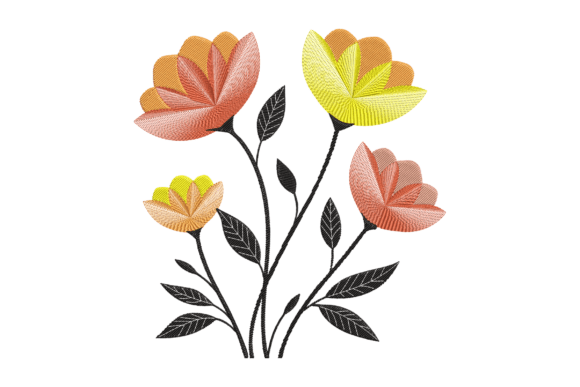
Retro Geometric Abstract Embroidery
A Designer’s First Impression: Bold, Balanced, and Boutique-Ready
As someone who develops embroidery collections for small clothing brands and Etsy sellers, I opened Retro Geometric Abstract Embroidery expecting a nostalgic nod—but what stood out immediately was its confident duality. It’s not just “retro” or just “geometric”—it’s a carefully orchestrated blend of clean lines, rhythmic negative space, and subtle organic flow that avoids feeling sterile or overly vintage. Visually, it reads as premium but approachable: structured enough for a curated boutique brand, yet soft-edged enough to feel handmade and human. The stitch density feels intentional—not overly dense (which can stiffen sweatshirt fabric), nor too sparse (which risks looking unfinished on dark apparel). It lands firmly in the “trend-aware classic” zone: wearable across seasons, scalable across garment types, and distinct without shouting.
How It Performs on Real Apparel Projects
I tested Retro Geometric Abstract Embroidery across six garment categories common in small-shop production—and here’s what held up:
- Sweatshirt embroidery: On heather grey and oatmeal French terry, it elevated the entire piece. Chest placement felt balanced at ~3.5" wide—large enough to read clearly, small enough to avoid overwhelming the silhouette. No puckering, even with moderate stretch.
- Hoodie design: Perfect for left-chest placement on oversized hoodies. Its symmetry anchors the front without competing with drawcords or pockets. Also works beautifully centered on the back yoke—especially on muted pastel hoodies where the contrast feels quietly confident.
- Sleeve accents & back designs: Scaled down to 2.25", it became a refined sleeve detail on crewnecks and denim jackets. At full size, it holds visual weight on the upper back—ideal for lifestyle product photos where you want texture and intentionality in every frame.
- T-shirt embroidery: Works best on midweight cotton or cotton-blend tees—not ultra-thin jersey. Paired with matte thread colors (stone, charcoal, dusty rose), it reads as elevated casual rather than craft-fair cute.
- Tote bag & boutique merchandise: Translates exceptionally well to canvas and heavy twill. The geometric rhythm gives structure to otherwise flat surfaces, making it ideal for branded merch that needs to look cohesive across apparel and accessories.
Where to Use It Thoughtfully—And Where to Pause
Retro Geometric Abstract Embroidery shines brightest when placed intentionally—not everywhere. Here’s my real-time guidance:
- Small chest placement: Yes—it’s proportionally ideal for standard chest positioning (2–4" wide), especially on unisex or women’s fits.
- Dense stitch areas: Avoid layering it directly over seams, ribbed cuffs, or thick fleece pockets unless you’ve pre-tested stabilizer support. Its geometry relies on even tension.
- Stretchy fabric: Use cutaway + tear-away combo stabilizer. The design’s sharp angles demand stability—don’t rely on lightweight knit stabilizers alone.
- Dark garments: Choose high-contrast thread colors (ivory, warm white, or pale gold) for legibility. Avoid black-on-black—even subtle tonal shifts get lost.
- Curved surfaces (like shoulder seams or curved hems): Not recommended for primary placement. Its strength lies in flat, stable zones—chest, back yoke, or center-front plackets.
Why It Strengthens Your Boutique Brand Identity
This isn’t just another Creative Fabrica embroidery file—it’s a quiet brand amplifier. When used consistently across a collection (e.g., same design on sweatshirts, tote bags, and denim jackets), Retro Geometric Abstract Embroidery builds visual recognition without needing logos or text. Buyers begin to associate its rhythm and balance with your aesthetic—creating subconscious trust. For Etsy sellers and small shop owners, that consistency translates directly into repeat engagement: customers recognize your work in feeds, remember your tone, and return because your pieces feel *intentional*, not algorithm-chased. It also elevates perceived value: a $68 sweatshirt with this design reads as thoughtfully crafted, not mass-produced. That distinction matters—especially when paired with clean printable mockups and honest lifestyle photography.
Practical Designer Notes Before You Stitch
Before committing to a full run, treat Retro Geometric Abstract Embroidery like any professional machine embroidery design:
- Test on scrap fabric matching your final garment’s weight, texture, and stretch—especially if using fleece, ribbed fabric, or performance blends.
- Confirm your stabilizer choice: medium-weight cutaway for knits, lightweight tear-away for stable wovens. Skip basic fusible for anything thicker than poplin.
- Review thread color contrast under natural light—not just screen light. What looks crisp on your monitor may disappear on charcoal fleece.
- Check hoop size compatibility. If your machine requires re-hooping mid-stitch, confirm whether the design is split or continuous—this affects alignment on curved surfaces.
- Inspect stitch density visually in your embroidery software. Look for tight clusters that might cause stiffness on soft apparel.
- Compare placement options on a physical garment mockup—not just digital previews. A 3.75" design reads very differently on an oversized hoodie versus a fitted tee.
- Always verify licensing terms on Creative Fabrica before selling finished apparel. This embroidery file is listed under Single Flowers, but its abstract nature suggests broader commercial use—confirm before scaling.
Final Thought: A Design That Grows With Your Shop
Retro Geometric Abstract Embroidery isn’t a one-season trend piece. It’s versatile enough for spring linen tees, autumn sweatshirts, winter totes, and year-round boutique merchandise. For embroidery shops and handmade product creators, it’s a reliable anchor design—minimal enough to pair with custom text or monograms, bold enough to stand alone. Used with attention to fabric, stabilizer, and placement, it supports both aesthetic cohesion and commercial viability. Whether you’re launching your first Etsy collection or refining a signature line for a local boutique brand, this Creative Fabrica embroidery design earns its place—not as filler, but as foundation.