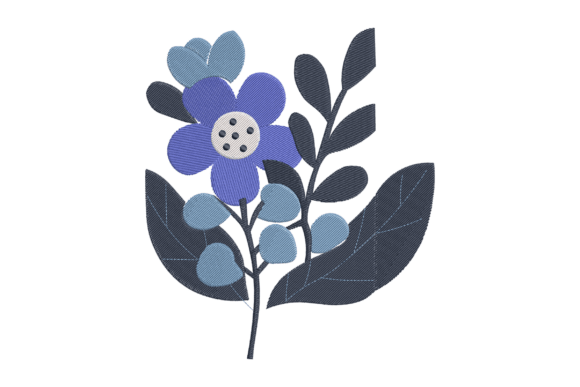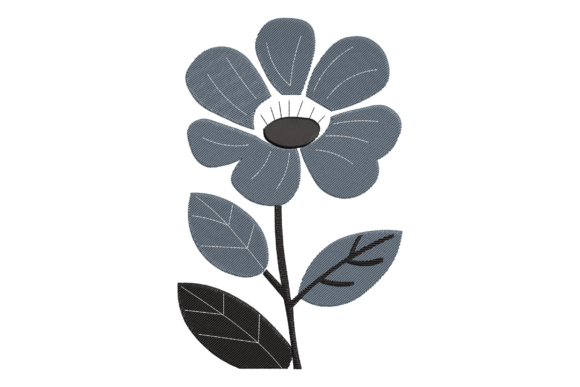
Minimal Blue Grey Flower Embroidery
A Craft Fair Designer’s Real-World Review Before Booth Day
As an embroidery designer who’s packed, stitched, and sold at over 70 craft fairs—and shipped thousands of handmade products to Etsy buyers—I opened Minimal Blue Grey Flower Embroidery with a very specific question: Will this stop someone mid-aisle? The answer is yes—but only if it’s placed right. This isn’t a loud, festival-ready bloom. It’s quiet confidence in thread form: elegant, modern, and effortlessly neutral. That blue-grey tone reads as both soft and intentional—neither cold nor washed out—and the floral shape leans minimal without feeling sterile. It’s the kind of machine embroidery design that whispers “handmade quality” rather than shouting for attention.
Where It Shines on Craft Fair Products
On a crowded booth table, Minimal Blue Grey Flower Embroidery performs best when paired with clean, tactile fabrics and thoughtful scale. Here’s how it lands across key handmade product categories:
- Tote bag design: Stunning as a single 3.5"–4" placement near the bottom corner of a natural canvas or oat linen tote. It adds refinement without overwhelming the bag’s utility.
- Apron embroidery: Perfect above the pocket on a denim or unbleached cotton apron—especially when stitched in tonal grey thread. Feels artisanal, not costume-y.
- Tea towel embroidery: Works beautifully centered on a folded edge or subtly tucked into one corner. The low-contrast palette complements textured terry and waffle weaves without fighting them.
- Embroidered patch: Highly effective at 2.25"–2.75". Clean lines hold up well when heat-applied or sewn onto denim jackets, market bags, or kids’ backpacks.
- Pillow cover & small pouch: A standout focal point at 3"–3.75". Gives boutique-level polish to linen or cotton-linen blends—ideal for giftable handmade products.
- Caps & curved surfaces: Proceed with caution. The design’s gentle curves translate well, but avoid placing it too close to the bill seam or crown peak unless you’ve tested hoop stability and fabric stretch first.
What Makes It Sell—And What Requires Extra Care
This digital embroidery file succeeds because it’s instantly legible, emotionally resonant, and commercially versatile. At a glance, customers recognize it as floral—but not fussy. As a Single Flowers design, it avoids visual clutter while still delivering botanical charm. That makes it highly repeatable for batch production: whether you’re stitching 12 tea towels or 50 patches, consistency stays strong.
But don’t assume “minimal” means “no-fuss.” Here’s where real-world production demands attention:
- Stitch density matters. If the file packs fine stem details or tight petal layering, test on your target fabric *before* cutting 30+ pieces. Dense areas can pucker on lightweight cotton or stiffen textured towels.
- Small-scale clarity drops fast. Below 2", subtle petal definition may blur—especially on dark fabric or high-pile surfaces. Always verify readability on scrap before committing to tiny placements (e.g., on wristlet zippers or collar accents).
- Fabric texture changes everything. That same stitch file looks airy on smooth poplin but muffled on thick terry or looped toweling. Adjust stabilizer weight accordingly—medium tear-away for most cottons, cut-away for knits or stretchy blends.
- Thread colors make or break the mood. Stick with matte cotton or rayon in soft charcoal, heather grey, or dusty blue. Avoid high-sheen metallics or neon-adjacent tones—they undermine the design’s calm elegance.
Why It Strengthens Your Booth & Brand
In person, Minimal Blue Grey Flower Embroidery elevates perceived value without raising price points. Customers touch a linen pillow cover with this motif and immediately associate it with care, intention, and quiet sophistication. That translates directly to higher conversion rates at craft fairs—especially among shoppers seeking heirloom-adjacent, non-trend-driven handmade products.
It also builds brand consistency across your line. Whether stitched on a market bag, an apron, or a gift pouch, the motif reads as part of a cohesive collection—not a random add-on. That unity strengthens booth display strength: a row of coordinated items with this embroidery creates rhythm and visual trust.
For the Etsy seller or small shop owner, this design excels in digital presentation too. It photographs cleanly against neutral backdrops, scales well for thumbnail views, and pairs naturally with printable mockups that highlight lifestyle context—not just the stitch itself. Buyers scrolling quickly still grasp its versatility and premium feel.
Designer Notes You Can’t Skip
Before you load this embroidery file into your machine or list finished products online, do these six things:
- Test on scrap fabric—same type, same color, same stabilizer—as your final product.
- Check thread contrast by holding stitched samples under natural light and booth-style LED lighting.
- Review spacing and proportions in your embroidery software: does the flower sit comfortably within your standard hoop size? Is there enough breathing room around stems for trimming or turning?
- Inspect stitch density visually and by touch—does it lie flat? Does it flex with the fabric?
- Create at least one real mockup—not just a digital render. See how it lives on the actual tote, towel, or cap.
- Confirm commercial licensing before selling finished products. Since this is marketed as a machine embroidery design for enhancing clothing and accessories, assume it permits commercial use—but always verify terms in the original download or vendor policy.
Bottom line: Minimal Blue Grey Flower Embroidery isn’t flashy—but it’s reliable, refined, and quietly magnetic. For the craft fair seller, boutique maker, or Etsy entrepreneur building a portfolio of elevated handmade products, it’s less of a trend and more of a foundational design asset. Used intentionally, it doesn’t just decorate—it defines.