Pleasant Rose Flower Bluework Embroidery
A Timeless Border Design That Builds Brand Warmth
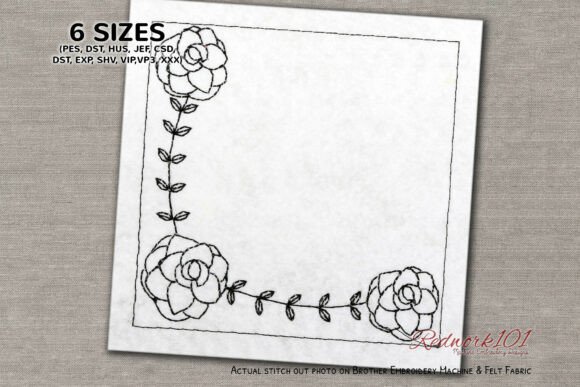
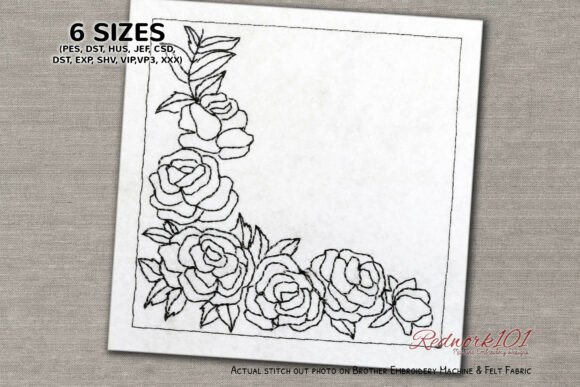
As an embroidery designer who’s developed hundreds of commercial designs for small businesses—from neighborhood bakeries to indie florists—I immediately recognized the quiet strength in Pleasant Rose Flower Bluework Embroidery. It doesn’t shout. It invites. Its vintage line-art aesthetic, classic rose cluster composition, and corner-border structure signal craftsmanship, care, and continuity—qualities that resonate deeply with customers seeking authenticity. This isn’t just decorative stitching; it’s a subtle brand amplifier. For a café stamping its logo on linen aprons or a handmade soap brand adorning cotton tote bags, this design delivers approachable elegance without sacrificing clarity or stitch integrity.
Where It Shines in Real Small Business Merchandise
Pleasant Rose Flower Bluework Embroidery excels where subtlety meets storytelling. As an embroidered patch, it works beautifully on denim jackets, canvas totes, and staff uniforms—especially when paired with a simple monogram or business name. Its border format makes it ideal for framing chest logos on work shirts or anchoring sleeve details on boutique aprons. On caps, it performs best on the side or back panels rather than the curved front—its linear rose cluster maintains legibility without distortion. For tote bag design or product packaging accents, the corner layout allows clean placement near seams or hems, reinforcing visual hierarchy without overwhelming the item.
Because it’s rooted in bluework tradition—a style known for fine line definition and minimal fill—it translates well across fabric types: medium-weight cottons, twills, and even textured linens. I’ve used similar borders for a local pet brand’s bandana line and a creative studio’s limited-run workshop kits—and each time, customers commented on how “thoughtfully made” the pieces felt. That perception directly supports brand identity and builds customer trust, especially among shoppers who value handmade presentation and attention to detail.
Smart Placement & Practical Limits
While versatile, Pleasant Rose Flower Bluework Embroidery demands thoughtful application. Its delicate line art and clustered rose motif lose impact below 2.5 inches in width—so avoid using it as a tiny cap front or micro-patch on keychains. On highly curved surfaces like baseball caps or rounded mugs (if used in printable mockups), test the outermost petals for stretch distortion. Also, avoid dense thread stacking in tight corners unless your digitizer confirms balanced stitch density; over-stitched clusters can pucker lightweight fabrics or fade after repeated washing.
Dark uniforms? No problem—but confirm thread colors contrast strongly against base fabric. A soft ecru or charcoal rose works on navy twill, but pale blue thread may disappear on black canvas. Likewise, textured fabric like bouclé or heavy canvas requires extra stabilizer support to hold those fine outlines crisp. Always run a sample on your target material before bulk production—what looks clean on screen rarely behaves the same on real fabric.
How It Strengthens Your Visual Consistency
In branding, consistency isn’t about repetition—it’s about resonance. Pleasant Rose Flower Bluework Embroidery serves as a unifying visual motif across touchpoints: a single rose cluster on a staff apron, echoed as a corner accent on gift tags and tote bags, then subtly repeated in digital assets like email headers or social banners. Because it’s categorized under Borders and built as a flexible machine embroidery design, it scales gracefully across mediums without needing redesign. That cohesion tells customers your business is intentional—not pieced together.
For Etsy sellers and craft-based brands, this design reinforces perceived value. Handmade products gain legitimacy when paired with refined, professional embroidery file execution. Buyers associate clean line work and balanced spacing with quality craftsmanship—boosting buyer engagement and willingness to pay a premium. And because it leans classic rather than trendy, it won’t date your merch within a season.
Essential Designer Notes Before You Stitch
- Test in black and white first—this reveals spacing issues and outline clarity better than color previews.
- Check small patch viability: Resize to your intended dimensions and verify petal separation and stem continuity at 1.75"–2" width.
- Review thread color contrast against your fabric swatches—not just on screen. Natural light changes everything.
- Inspect spacing between roses and along the border edge. Tight clusters need breathing room to avoid crowding.
- Confirm hoop size compatibility—especially if pairing with other design assets in multi-position layouts.
- Test on real fabric with your standard stabilizer stack. Linen behaves differently than poly-cotton blends.
- Create a printable mockup for client approval—include context (e.g., on an apron hem or tote corner) so stakeholders visualize use.
- Compare beside existing design assets: Does it harmonize with your logo, typography, and color palette—or compete?
- Verify commercial licensing before applying to merchandise you sell. Not all digital embroidery file vendors grant blanket commercial rights.
Final Thought: More Than a Border—A Brand Signature
Pleasant Rose Flower Bluework Embroidery is more than a border—it’s a quiet signature. For small businesses investing in custom apparel, apron embroidery, or cap embroidery, it offers a rare balance: heritage charm with modern utility, visual richness without visual noise. When applied intentionally—as part of a cohesive system of design assets—it elevates the finished product, strengthens brand identity, and quietly communicates care to every customer who touches your small business merch. In an era where mass production feels hollow, this kind of considered detail isn’t just decoration. It’s differentiation.