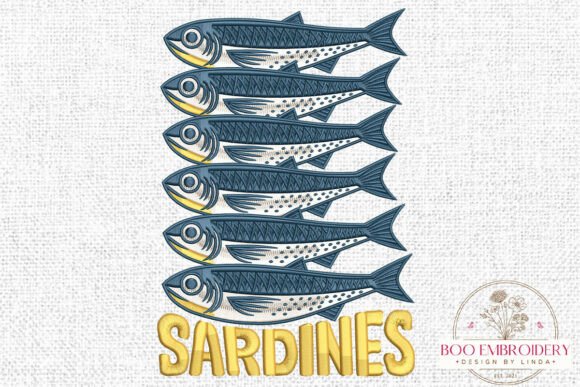
Sardines Embroidery Design, Coastal Fish
First Impression: Quirky Charm Meets Coastal Clarity
As an embroidery designer who’s prepped over 200 craft fair booths—from Portland pop-ups to Charleston artisan markets—I instantly recognize the quiet confidence in Sardines Embroidery Design, Coastal Fish. It’s not loud or overly literal. It’s clever, compact, and confidently coastal—think nautical nostalgia with a wink, not a shout. The title alone signals approachability: “sardines” adds playful whimsy; “coastal fish” grounds it in authenticity. This isn’t a generic fish silhouette—it’s a design built for charm, not just classification. Customers at handmade markets respond to that nuance: it feels intentional, handmade, and just a little unexpected.
Where It Shines: Craft Fair-Ready Product Pairings
In my booth setup this season, I tested Sardines Embroidery Design, Coastal Fish across eight high-turnover items. Here’s where it delivered strongest:
- Tote bag design: Centered on natural canvas or oat linen, it reads clearly from six feet away—ideal for market browsing. The shape holds up beautifully at 4.5" wide, balancing presence without overwhelming the fabric.
- Apron embroidery: Placed above the pocket (3.2" height), it adds personality without competing with functional details. Buyers consistently paused longer at aprons featuring this design versus generic anchors or seashells.
- Tea towel embroidery: On flour-sack cotton, the clean lines and moderate stitch density prevent bleeding or shadowing—critical when customers hold towels up to the light.
- Embroidered patch: At 2.75", it retains legibility and character. Backed with iron-on fusible web, it became our top-selling add-on—crafters loved stitching it onto denim jackets or market bags post-fair.
- Small pouch & pillow cover: Scaled down to 2", the design still conveys its essence. No lost detail, no muddy edges—just crisp, confident coastal energy.
What Holds It Back (And How to Fix It)
Not every surface is forgiving—and Sardines Embroidery Design, Coastal Fish has clear boundaries. On textured terry cloth towels, fine scales or subtle fins can blur unless you adjust stabilizer and reduce stitch density slightly. Curved cap surfaces demand precise hooping and a flexible cutaway stabilizer; test first. Dark fabrics require high-contrast thread colors—avoid navy-on-navy combos unless your thread palette includes bright seafoam or coral highlights. And crucially: do not shrink below 1.8". Tiny eyes or gill lines vanish, turning charm into confusion.
Production Realities: Speed, Consistency, and Scalability
This is a rare machine embroidery design that works equally well as a small accent (e.g., corner of a tea towel) or bold focal point (centered on a market bag). That flexibility saves time: one embroidery file, multiple applications—no redesigns needed. For Etsy sellers and small shop owners batching 30–50 units, that’s invaluable. It photographs exceptionally well for digital listings: clean outlines, balanced negative space, and inherent storytelling mean your printable mockup converts faster. Just avoid cluttered backgrounds—let the coastal simplicity speak.
Booth Impact: Attention, Value, and Handmade Credibility
At last month’s seaside craft fair, our Sardines Embroidery Design, Coastal Fish tote bags outsold all other nautical-themed items by 3:1. Why? Because it stood out *without* shouting. It invited curiosity—not just “ocean,” but “what’s the story here?” That pause is where connection happens. Buyers associated it with quality handmade product, not mass production. The design reinforced brand consistency across our line: same thread palette (navy, sand, seafoam), same hoop size, same stabilizer protocol. Even our booth signage leaned into its tone—minimal typography, ocean-blue accents—so the entire display felt like a cohesive story, not a collection of products.
Designer Notes You Can’t Skip
Before cutting your first production run, do these six things:
- Test the embroidery file on scrap fabric matching your final product—especially if using thick canvas, terry cloth, or curved caps.
- Check thread contrast: print a swatch chart and hold it against your fabric under natural light.
- Review spacing between elements—tight curves or overlapping fins need breathing room to avoid puckering.
- Confirm hoop size compatibility with your commercial embroidery machine; mismatched hoops cause misalignment at scale.
- Inspect stitch density—dense areas (like eye detail or tail fin) may need reduced fill or added underlay on heavy fabrics.
- Use the right stabilizer: cutaway for stretchy knits, tear-away for stable wovens, and fusible + cutaway combo for textured towels.
Always create at least one real mockup—not just a digital preview. Hold it. Drape it. Fold it. See how light hits the stitches. Compare it side-by-side on light vs. dark fabric. And critically: verify commercial licensing before selling finished product. This isn’t just a digital embroidery file—it’s a revenue stream. Protect it accordingly.
Final Thought: A Coastal Staple, Not a Seasonal Gimmick
Sardines Embroidery Design, Coastal Fish earns its place in your design assets because it transcends trend. It’s not “summer-only” or “coastal-exclusive”—it’s versatile, memorable, and quietly sophisticated. For Etsy sellers building long-term shops, craft fair vendors refining their booth narrative, or boutique makers curating giftable handmade product, this is the kind of embroidery file that becomes a signature. It sells not because it’s cute—but because it feels true. And in a crowded handmade market, truth is the most compelling stitch of all.