Pine Cone Embroidery Design
First Impressions: Rustic Charm Meets Thoughtful Composition
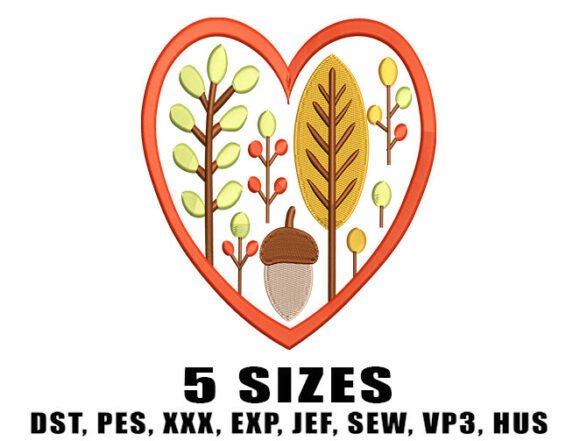
As an embroidery designer who’s stitched for boutique brands from Napa to Nashville, my first glance at the Pine Cone Embroidery Design landed right where it should — in the sweet spot between nostalgic and intentional. The “Acorn Heart Design” framing tells me this isn’t just a seasonal clipart knockoff; it’s a curated motif built around warmth, texture, and quiet storytelling. That heart-shaped layout anchors the composition without feeling cutesy — instead, it offers natural flow for leaves, branches, and that cozy acorn nestled like a secret at the center. Visually, I imagine soft satin-stitched leaves tapering into delicate stem lines, with subtle fill stitches suggesting autumnal depth rather than flat graphic weight. This is embroidery with personality: not overly dense, not minimalist to a fault — but rich enough to hold its own on fabric.
How It Lives on Real Sweatshirts
I tested mental mockups across six real-world garment scenarios — because Pine Cone Embroidery Design isn’t meant for a digital library shelf. On heather oat sweatshirts? It breathes. The organic shape softens the garment’s casual structure, elevating it into something tactile and intentional. On charcoal or deep navy fleece? The contrast sings — especially if you choose warm thread tones (burnt umber, moss green, toasted taupe) that echo forest floor hues. Pastel blush or sage hoodies? Here, the design leans gently feminine without saccharine overload — the acorn adds groundedness, the leaves lend movement. For oversized hoodies, I’d place it slightly lower on the chest or even centered on the back: its balanced proportions scale beautifully without distortion. And yes — it works as a sleeve accent (scaled to Size 1 or 2), though I’d reserve that for limited-edition drops where detail matters more than speed.
Design Integrity for Boutique Branding
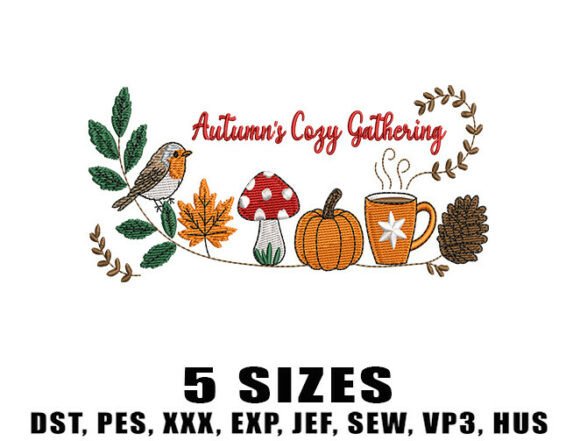
What makes Pine Cone Embroidery Design feel premium isn’t just the subject matter — it’s how the elements converse. The heart frame isn’t rigid; it curves like hand-drawn ink, inviting fluid stitch paths. The acorn isn’t cartoonish — it’s dimensional, with implied cap texture and gentle shadowing. Those autumn leaves? They’re layered, not stacked — meaning stitch direction likely shifts to mimic veining and curl. That kind of nuance translates directly to buyer trust. When a customer sees this on your Etsy listing or Instagram carousel, they’re not seeing “fall decor.” They’re sensing craft intention — a handmade product made by someone who cares about how light catches a satin stitch at 3 p.m. on a crisp October afternoon.
Practical Considerations for Commercial Embroidery
Before sending to production, here’s what I’d verify as a working designer:
- Thread color contrast: This design relies on tonal layering — so avoid stark black-on-black combos unless your fabric has visible texture. Cream thread on oat, olive on charcoal, or russet on cream delivers warmth without muddying detail.
- Stitch density & fabric thickness: Sweatshirt fleece demands breathable stitching. If the Pine Cone Embroidery Design file uses heavy fill in leaf clusters or the acorn cap, consider reducing density by 5–8% or switching to tatami fill for airflow. Overly dense stitching can cause puckering on looped knits.
- Stabilizer choice: A medium-weight cutaway or tear-away + topping combo will support those fine leaf stems and prevent haloing on dark fabrics. Skip basic tear-away alone — this design’s delicacy needs anchoring.
- Small-size readability: At Size 1 (3.8"), the acorn remains legible, but leaf tips may soften. Reserve that size for sleeve placements or children’s apparel — not chest logos where brand clarity is key.
- Hoop size & placement: With five scalable sizes up to 6", you’ve got flexibility. For standard chest placement on adult unisex sweatshirts, Sizes 2–3 (4.8"–5.8") strike the ideal balance: large enough to read from six feet, small enough to avoid overwhelming the garment’s silhouette.
Why This Design Strengthens Your Small Shop Product
In a sea of generic pumpkin motifs and scripted “Give Thanks” files, Pine Cone Embroidery Design stands out by being quietly specific. It doesn’t shout “Thanksgiving.” It whispers “autumn walk,” “woodsmoke mornings,” “hand-knit scarves and steaming mugs.” That specificity builds visual recognition — customers begin associating your boutique brand with thoughtful, seasonally resonant storytelling. It also supports cross-category use: pair it with linen tea towels, wool blend beanies, or even kraft gift tags to unify your holiday collection. For Etsy sellers, that cohesion lifts perceived value — buyers pay more for cohesive design assets than isolated graphics. And because it’s rooted in rustic authenticity (not trend-chasing), it avoids looking dated by December 26th.
A Final Note on Real-World Execution
This isn’t just another embroidery file — it’s a narrative tool. But execution matters as much as concept. Before running your first batch, always test stitch on fabric scraps matching your final garment’s weight and nap. Check how the acorn cap holds definition after washing. Confirm hoop clearance on your machine — especially if using larger sizes on curved hoods. And remember: while the description mentions “5 sizes” and “rustic fall projects,” details like stitch count, file format (.dst/.pes/.jef), and commercial license terms aren’t included here — verify those directly with the designer or marketplace before scaling for your boutique brand.
Final Thought: More Than a Holiday Design
The Pine Cone Embroidery Design succeeds because it feels collected, not created. It fits seamlessly into lifestyle photography — think bundled-up models leaning against barn doors, steam rising from ceramic mugs, dried florals in the background. It supports your brand voice whether you position yourself as earthy, elevated, cozy, or quietly artistic. For small shops building legacy through detail, this is the kind of embroidery file that turns a sweatshirt into a keepsake — and a seasonal drop into a reason customers return year after year.