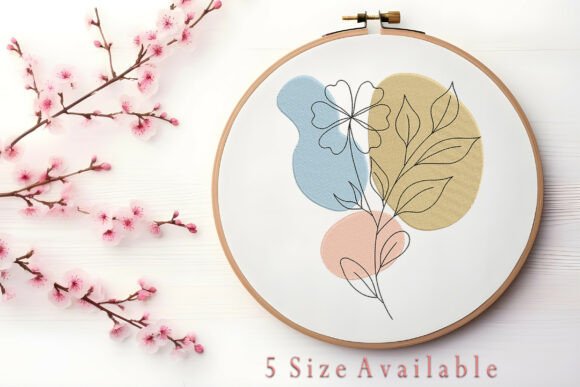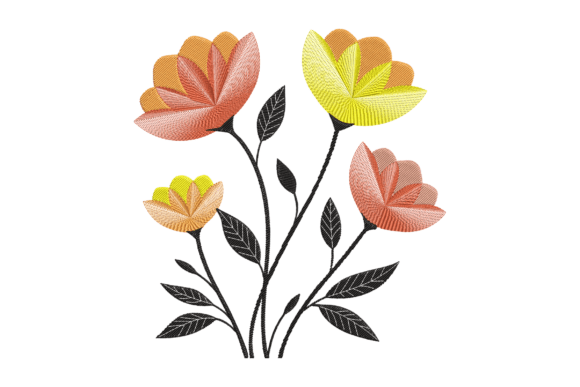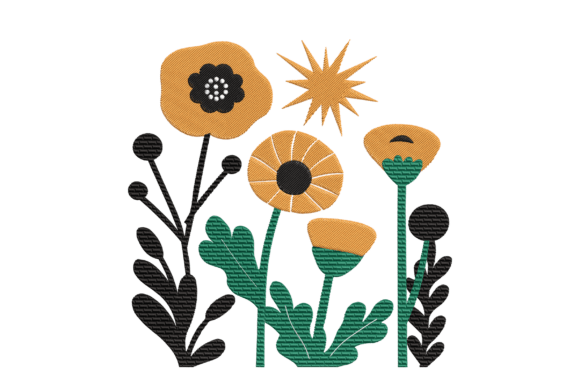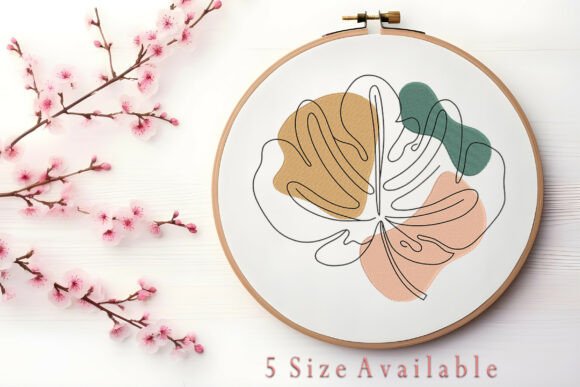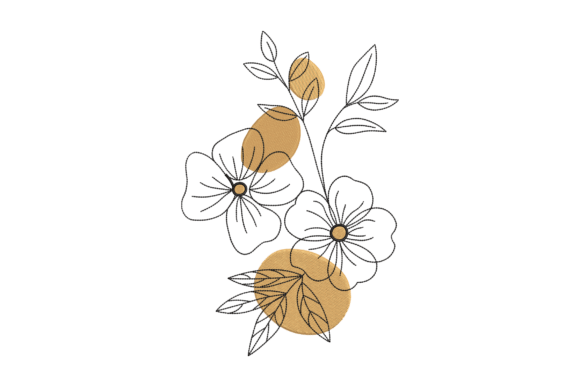
Minimalist Floral Line Art Embroidery
A Designer’s Real-World Review for Small Business Merchandise
As an embroidery designer who’s developed and tested hundreds of machine embroidery designs for small businesses—from neighborhood cafés to Etsy-based florists—I approached the Minimalist Floral Line Art Embroidery with a specific question: *Does this design translate into trustworthy, scalable brand expression—not just pretty decoration?*
At first glance, the title alone signals intention: “minimalist” suggests clarity and restraint; “floral line art” promises organic softness without visual noise. That balance—elegance without fuss—is rare in digital embroidery files meant for commercial use. It doesn’t scream “handmade charm” or “vintage rustic”—it leans into modern sophistication while retaining warmth. That makes it unusually versatile across industries: a boutique bakery can use it on aprons without looking overly sweet; a pet wellness brand can stitch it onto collars without sacrificing professionalism; a local florist can apply it to tote bags and still feel premium, not generic.
Where It Shines in Real Business Applications
The Minimalist Floral Line Art Embroidery excels where subtlety builds credibility—not spectacle. Here’s how it performs across common small business merch needs:
- Embroidered patches: Its clean lines hold up beautifully at 2"–3" sizes—ideal for iron-on or sew-on branding on jackets, uniforms, or product tags. No fill stitches mean low stitch density, faster production, and less thread waste.
- Staff uniforms & aprons: Placed subtly on chest pockets or sleeve cuffs, it reinforces brand identity without overwhelming functional apparel. The line art style reads clearly even after repeated laundering—no dense fills to crack or fray.
- Cap embroidery: Works well on structured front panels (not curved bill edges) when sized to 1.75"–2.25". Avoid stretching it across high-curve zones—the simplicity relies on consistent line weight.
- Tote bag design & custom apparel: Scales elegantly from 3" on a linen tote to 1.5" on a pocket tee. Because it’s single-flower focused, it avoids visual competition with logos or text—making it perfect as a secondary brand mark.
- Product packaging accents & boutique merchandise: When stitched onto fabric gift tags, reusable produce bags, or ceramic coaster sleeves, it elevates perceived value without requiring color matching or complex digitizing.
Use With Intention—Not Everywhere
This isn’t a one-size-fits-all emblem. As a working embroidery designer, I advise caution in these scenarios:
- Very small patch sizes (<1.25"): Delicate stems or fine petals may lose definition—always test stitch at your target size before bulk production.
- Dark uniforms or textured fabric: While minimalist, the design relies on contrast. On heavy twill or fleece, consider slightly thicker line weights or a subtle satin-stitch border—check your digitized file for thread color recommendations.
- High-wear items like work shirts or chef coats: Confirm the file uses secure underlay and appropriate stop points—minimalism shouldn’t mean fragile stitching.
- Curved surfaces (e.g., cap bills, curved seams): Line art with tight bends may distort unless the digitizer built in stretch compensation. Always hoop and test on the actual substrate.
How It Strengthens Brand Identity—Beyond Aesthetics
For small business owners, every embroidered detail shapes customer perception. The Minimalist Floral Line Art Embroidery supports brand trust because it feels intentional—not trendy or disposable. Its restraint signals confidence: you don’t need clutter to communicate quality. That directly impacts buyer engagement—shoppers associate clean, considered details with craftsmanship and care.
When used consistently across touchpoints (e.g., staff aprons + customer tote bags + product packaging), it builds visual consistency without demanding logo-level dominance. It functions as a quiet signature—a handmade product marker that says “thoughtfully made,” not “mass-produced.” For Etsy sellers or craft studios, that nuance is critical: it differentiates your offering in crowded marketplaces where authenticity sells.
Practical Embroidery Designer Notes for Commercial Use
Before launching production, here’s what I always verify—and recommend you do too:
- Test in black and white first: Print or stitch a monochrome version to assess line balance and spacing—color can mask weak structure.
- Check small-patch viability: Resize the embroidery file to your smallest intended application (e.g., 1.5" cap front) and simulate stitch count—avoid designs that compress delicate elements.
- Review thread color contrast: Even minimalist line art needs visibility. Match thread to fabric tone—not just hue—to ensure legibility on darks, lights, and midtones.
- Inspect spacing and underlay: Tight loops or intersecting stems need proper underlay to prevent puckering, especially on knits or lightweight cotton.
- Confirm hoop size compatibility: Ensure the design fits your standard hoops—no last-minute re-hooping delays during production runs.
- Test on real fabric: Digitally perfect doesn’t equal physically stable. Run a sample on your actual garment or patch material with correct stabilizer.
- Create a printable mockup: Present stitched samples alongside your brand palette and typography—clients approve outcomes, not just files.
- Compare beside other design assets: Does the Minimalist Floral Line Art Embroidery harmonize with your logo, website graphics, and packaging? Consistency starts with alignment.
- Verify commercial licensing: Since this is a digital embroidery file intended for small business merch, confirm it permits commercial embroidery, resale of finished products, and use on branded patches—don’t assume.
The Minimalist Floral Line Art Embroidery isn’t just another floral motif—it’s a strategic asset. When applied thoughtfully, it quietly strengthens brand identity, elevates handmade presentation, and delivers professional polish across apparel, accessories, and retail merchandise. For embroidery shops, apparel decorators, and small business owners building recognizable, values-driven brands, it’s a rare blend of simplicity, scalability, and sincerity.