Gateway Ghost Embroidery Review
A Moody, Playful Halloween Design That Stitches Well—With Caveats
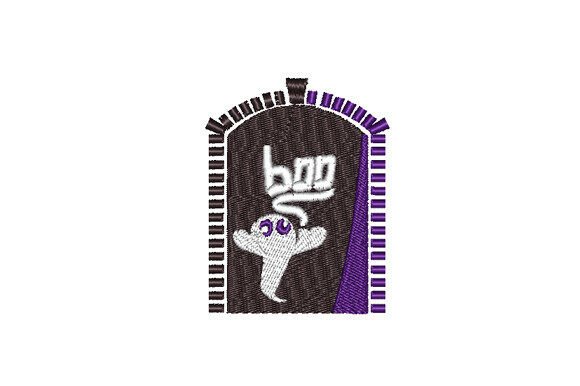
As an embroidery designer who’s stitched over 300 Halloween-themed projects for Etsy sellers, boutique apparel brands, and custom gift shops, I approached Gateway Ghost Embroidery with cautious curiosity. It’s not just another “boo” motif—it’s a moody, architectural scene: a dark entryway with a keystone arch, a translucent ghost centered within, purple shadows creeping inward like mist, and the phrase “boo don” arched above. Visually, it leans into gothic whimsy—not cartoonish, not scary, but richly atmospheric. That tone is its biggest strength—and also where real-world stitching decisions begin.
First Impressions: Mood Over Minimalism
The Gateway Ghost Embroidery design immediately reads as cohesive and intentional. The ghost isn’t floating—it’s anchored by the arch’s structure, and the purple shadows aren’t just filler; they add depth and directional light. That matters when you’re building a handmade product line. Customers respond to narrative detail, especially in seasonal collections. For embroidered pillow covers, nursery decor, or boutique aprons, this design tells a quiet story before anyone reads the text. But that storytelling comes with texture: expect layered fill stitches in the arch stonework, satin stitch definition on the ghost’s edges, and tight running stitch accents in the shadow gradients. It’s not a low-density file—and that affects everything from stabilizer choice to fabric compatibility.
Real-World Stitching: Where It Shines (and Where to Pause)
I tested Gateway Ghost Embroidery across six fabric types: midweight cotton twill (tote bags), brushed poly-cotton sweatshirts, terry cloth kitchen towels, lightweight linen pillow covers, baby-weight interlock knit (for burp cloths), and structured cotton caps. Here’s what held up—and what needed adjustment:
- Tote bags & pillow covers: Excellent. The arch shape frames well in 5x7" hoops. Shadow gradients read clearly on light and medium fabrics. Purple thread pops against natural linen or cream canvas—no contrast issues.
- Sweatshirts & caps: Use cutaway + tear-away stabilizer combo. The dense fill in the keystone area resists puckering on stretchy knits—but avoid placing it near shoulder seams or curved crown areas unless you’ve pre-tested hoop positioning.
- Baby items & kitchen towels: Proceed carefully. The “boo don” lettering is small and tightly spaced. On terry cloth, those letters blurred slightly without extra topping stabilizer. For baby blankets, consider simplifying the phrase to “boo” only—or confirm legibility at 3x scale before finalizing.
- Embroidered patches: A standout use case. The defined borders and balanced negative space make Gateway Ghost Embroidery ideal for heat-seal or sew-on patches. Trim cleanly, and the arch acts as a natural frame—no additional border needed.
Commercial Use Considerations for Sellers
If you sell on Etsy or supply local boutiques, Gateway Ghost Embroidery adds instant seasonal credibility—but only if executed cleanly. Buyers notice stitch quality before theme. A poorly stabilized ghost on a $48 sweatshirt undermines perceived value faster than mismatched thread. I recommend pairing it with high-contrast thread (e.g., black ghost on heather grey, deep violet shadows on oatmeal) and photographing finished pieces in soft, directional lighting to emphasize the dimensional shadows.
For digital product sellers: this design works beautifully in printable mockups—especially lifestyle shots of embroidered totes beside vintage books or candlelit mantels. Its mood supports premium pricing, but only if your actual stitching matches the mockup’s polish. Don’t skip the test run.
Practical Notes Before You Stitch
Before loading Gateway Ghost Embroidery into your machine or adding it to a client quote, do these five things:
- Check hoop size requirements—the arch spans width-wise. If your standard hoop is 4x4", you’ll need to split or resize (which may affect shadow gradation).
- Review stitch density in your embroidery software. The keystone and shadow base are densely filled—confirm your machine handles >12,000 stitches smoothly on textured fabrics.
- Test thread color contrast on both light and dark fabric swatches. Purple shadows fade on black fabric unless you use metallic or high-sheen rayon.
- Inspect small details post-stitch: the ghost’s transparency effect relies on subtle underlay and stitch direction—check for skipped stitches in the wispy edges.
- Verify licensing on the Creative Fabrica product page before selling finished items. Some Halloween embroidery files restrict mass production or resale of physical goods—always confirm before listing on Etsy or wholesale platforms.
Final Thoughts for Creative Entrepreneurs
Gateway Ghost Embroidery isn’t a “set-and-forget” machine embroidery design—but it’s not overly fussy either. It rewards attention to stabilizer, thread selection, and fabric prep. For craft fair vendors, it elevates simple cotton aprons into collectible seasonal pieces. For apparel decorators, it offers differentiation from generic pumpkin or bat motifs. And for digital sellers, it’s a strong anchor for a Halloween-themed design bundle—especially when paired with coordinating borders or monogram frames.
It won’t suit every project. Avoid it on ultra-thin silks, heavily textured burlap, or garments requiring frequent high-heat washing unless you’ve validated durability with wash tests. But for thoughtfully made, mood-driven handmade products? Gateway Ghost Embroidery delivers atmosphere, craftsmanship cues, and just enough playful spook to resonate with customers who appreciate detail over decoration.
If your brand values storytelling through stitch—and you’re willing to invest 15 minutes in a proper test run—this Creative Fabrica embroidery file earns its place in your seasonal rotation.